

Stone News: New UK Building Regulations and Stone Cladding
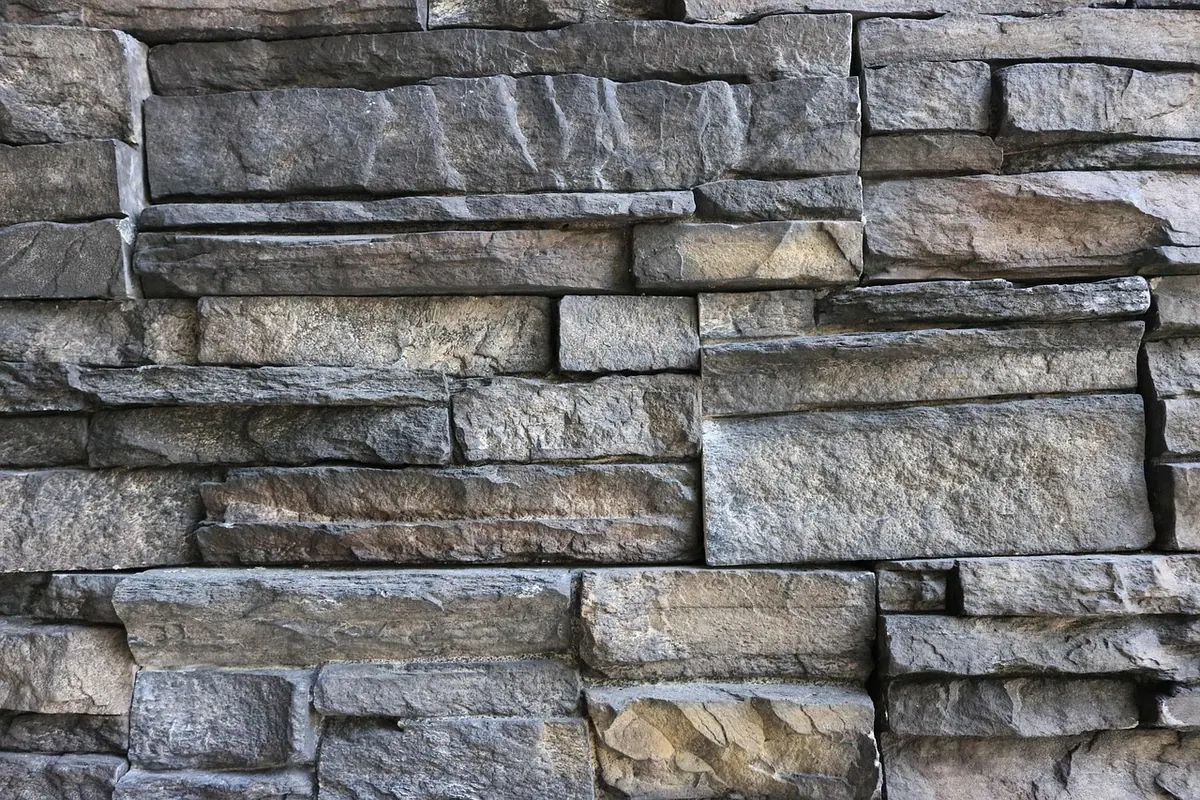
Stone cladding has spent several years in the regulatory spotlight, and for once the material comes out of it well. Natural stone does not burn, it weathers slowly, and it can be traced back to a quarry. The rules around it, though, have moved. New duties, a new regulator, tighter evidence requirements and a lower height threshold for combustible materials have changed what a compliant external wall looks like — and what a stone contractor is expected to produce on paper as well as on the elevation.
If you specify, supply or fix stone, here is what has shifted and what to do about it.
What has actually changed
The Building Safety Act 2022 is the big one. It created the Building Safety Regulator, which sits inside the Health and Safety Executive, and it introduced a much stricter regime for what the Act calls higher-risk buildings: those at least 18 metres tall or at least seven storeys, and containing at least two residential units. Hospitals and care homes are caught during design and construction as well.
Alongside the regulator came the gateway system — three checkpoints at planning, before construction begins and before occupation — and a set of named duty holders. The client, the principal designer and the principal contractor each carry duties that are personal as well as corporate, and the wider design and construction team is in scope too. The old defence of "the architect specified it" no longer ends the conversation. Everyone in the chain is expected to be able to explain what they did, why they did it, and what evidence sits behind the decision.
For external walls specifically, the other headline change is the threshold. Combustible materials were banned on the external walls of relevant buildings over 18 metres in 2018. From 1 December 2022 that ban was extended down to buildings of 11 metres or seven storeys, and metal composite material panels were banned outright on all buildings. Approved Document B now expects external wall materials on relevant buildings to achieve Class A2-s1, d0 or better, with narrow exceptions for things like seals, gaskets and fixings.
Combine the two regimes — the safety case world above 18 metres, the material rules above 11 — and you get a landscape where a mid-rise residential block with a stone rainscreen is now judged by standards that used to apply only to towers.
Why stone comes out of this well
Most natural stone used in UK cladding — granite, sandstone, limestone, and marble in many cases — achieves Euroclass A1 under BS EN 13501-1, with some stones landing at A2. That is the top of the reaction-to-fire scale. There is no foam core to argue about, no combustible filler, no polyethylene. A stone panel does not contribute to fire spread, and it does not lose its identity in a fire.
It is also unusually easy to evidence. A quarry is a fixed, auditable place. Stone can be traced from block to slab to elevation through a documented chain of custody, and the industry's testing and certification routes are well established. For a duty holder trying to assemble a safety case, a material that arrives with a stable composition and a paper trail is a gift.
But the stone is rarely the problem
Here is the uncomfortable part. The stone is almost never what fails a compliance review. What fails is everything around it:
- Fixings and bracketry — stainless steel or better, with a specification that survives a hot fire.
- Insulation — mineral wool, phenolic or PIR, each with its own Euroclass and its own conditions of use.
- Membranes and breather layers — often the weakest link in the assembly, and often overlooked at design stage.
- Sealants, tapes and gaskets — small components with outsized consequences.
- Cavity barriers and fire stopping — where the detailing is fiddly and the inspection record is thinnest.
- Sub-frames and carrier rails — aluminium is fine; the coatings and any composite elements need checking.
The regulation does not assess the panel. It assesses the wall. A1 stone fixed with the wrong bracket and the wrong membrane is not a compliant wall, and no amount of quarry certification changes that.
The paperwork is now the product
Ten years ago a stone subcontractor's submission might have been a specification clause, a brochure and a sample board. Today the pack looks more like a dossier. Expect to be asked for:
- Reaction-to-fire test reports to BS EN 13501-1, from an accredited laboratory.
- Declarations of performance and, increasingly, third-party certification.
- A full assembly assessment, not just individual components.
- Batch-level traceability from quarry to installed panel.
- Fixing design calculations, including thermal movement and wind loading.
- Installation records and photographs at each stage, including fire-stopping.
- Maintenance and inspection schedules for the life of the cladding.
On higher-risk buildings, all of this feeds a digital record — the so-called golden thread — that has to stay current through design, construction and occupation. It is not an archive. It is a living document, and it is meant to be handed over in a state someone else can actually use.
The direction of travel is clear: compliance is a design responsibility, not a paperwork task bolted on at the end.
What to do about it
If you are on the stone side of the fence, the practical response is less about learning new regulations and more about changing the order of operations.
- Start the evidence pack early. Test reports and declarations take time to obtain, especially from overseas quarries.
- Design the whole assembly, not the panel. Agree fixings, insulation, membranes and cavity barriers as one system, with one responsible designer.
- Assume the threshold is 11 metres, not 18. Most mid-rise residential schemes now sit inside the stricter regime.
- Document as you build. Photograph fire-stopping before it disappears behind stone.
- Know your national differences. Wales, Scotland and Northern Ireland run their own variations, and Scotland's cladding remediation work has moved on its own track.
- Train the fixing teams. A perfect specification installed badly is still non-compliant.
- Be honest about warranties. Insurers and lenders want evidence, and they will ask for it at the worst possible moment.
The commercial picture
None of this is free. Testing, certification, digital record-keeping and additional inspection all cost money, and on small schemes the overhead is proportionally brutal. Two counterweights are worth noting. First, stone's inherent performance reduces the risk of remediation, and remediation is where the real money disappears — the cost of stripping and replacing a failed cladding system dwarfs the cost of getting it right first time. Second, insurers have started pricing risk more accurately, and a non-combustible, traceable wall is easier to place than an unknown one.
Developers should also watch the Building Safety Levy, which is now part of the landscape for residential development in England and adds a per-square-metre cost to the equation. Compliance and cost are no longer separable conversations.
What comes next
The regulatory floor is still rising. Fire risk appraisals of external walls, standardised through PAS 9980, are now routine on existing buildings, and they apply the same logic: assess the wall as a system. EWS1 forms, whatever their critics say, continue to shape lending decisions and therefore value.
For stone, the trajectory is favourable. A material that is non-combustible, durable, repairable and traceable is exactly what a post-Grenfell regulatory regime rewards. The catch is that the reward only arrives if the stone is specified, fixed and documented properly — and that is now a discipline in its own right, not a footnote to the facade package.
This is general guidance only. Requirements differ across England, Wales, Scotland and Northern Ireland, and project-specific advice should come from your design team and building control body.
Photo: Olichel / Pixabay