
Local Stone: The Best British Stones for Period Property Restoration
Local Stone: The Best British Stones for Period Property Restoration
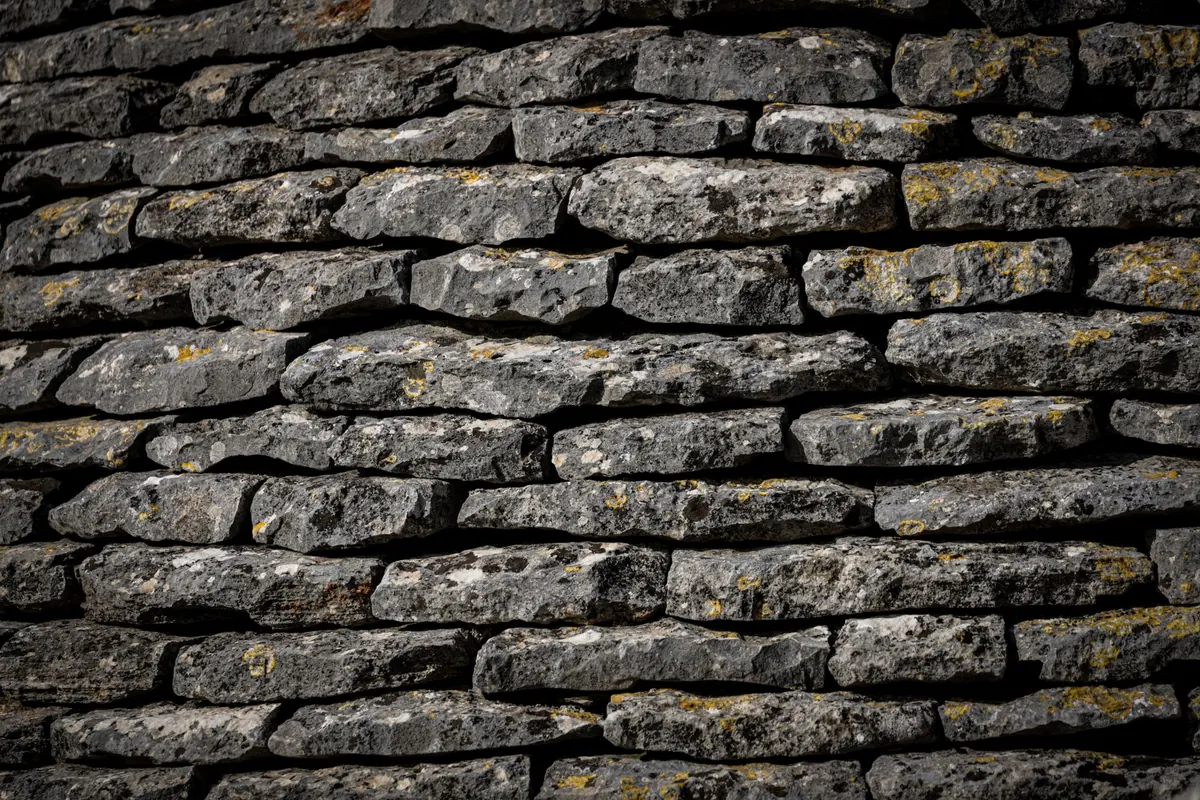
There is a particular look to stone that has spent two centuries in British weather: softened edges, a thin crust of lichen, joints drawn back slightly from the face, a colour no sample box quite reproduces. Patch it with the wrong material and the repair shouts across the street. Patch it with the right one and it disappears within a generation. That is the practical argument for using locally sourced British stone in restoration work — not nostalgia, just a sensible way of matching geology, porosity and the way a wall handles water.
Why the source matters as much as the colour
Two sandstones can look identical in a sample box and behave completely differently in a wall. Grain size, clay content, the direction of the bedding planes and how tightly the stone was compacted all affect how it takes in water, how it dries and how it weathers. Portland limestone, Bath stone and a Cotswold limestone are all oolitic — formed from tiny rounded grains in shallow Jurassic seas — yet they vary widely in hardness and in how they react to pollution and salt.
The difference becomes obvious once water is involved. A hard, impermeable replacement stone set into a soft, porous limestone wall can force moisture to evaporate through the original stone instead, accelerating its decay. The new stone may look right on the day it is laid, but within a decade the surrounding wall is flaking around it. Matching the source is not simply an aesthetic exercise; it is a way of matching the movement of water, salt and frost through the whole wall.
Consent matters too. On a listed building, or one in a conservation area, the conservation officer will expect repairs to match the original in type, colour, texture and tooling. Stone from the same formation, or as close to it as you can get, is the argument that usually wins. Reconstituted stone and resin-based imitations rarely do.
The best repair is not the one that looks newest. It is the one that weathers at the same rate as the stone around it.
Yorkstone: the workhorse of the north
Yorkstone is a Carboniferous sandstone quarried across West Yorkshire — around Huddersfield, Halifax and Wakefield — and it has paved the north for centuries. It is hard, dense and durable, which is why so much of it is still underfoot in mill yards, market squares and city centres. It takes foot traffic, frost and the gritting lorry with equal patience, and it develops a soft, dark patina that no new stone can imitate.
For restoration, the useful point is that "Yorkstone" describes a family rather than a single material. Flags from different beds differ in colour, from grey through buff to a brownish blue, and in how they split. A riven flag with a natural face behaves differently from a sawn one, and generally offers better slip resistance. When replacing flags, match the surface finish as carefully as the colour: a smooth sawn slab laid beside 150-year-old riven paving will always look new.
Salvaged Yorkstone is often the best answer, particularly for a small repair. Reclaimed flags have already done their shrinking and settling, and their edges have the softened profile that new stone lacks. Check them for delamination, though, especially if they have spent years in a damp yard or been lifted with a mechanical breaker. If you are buying new, ask where it was quarried and from which bed. "Yorkstone" has become a loose trade term for any hard sandstone paving, and some of it is nothing of the sort.
Bath stone and the limestone belt
Bath stone is the oolitic limestone that built Georgian Bath, mined underground at Combe Down and quarried on the surrounding hills. It is soft enough to saw and carve when first extracted and hardens as it dries, which explains its popularity for ashlar, mouldings, cornices and carved detail. It also explains why so much of it has been replaced over the years with stone from other quarries that has not weathered in anything like the same way.
Within Bath stone itself, beds vary. Some are finer and freer-working, suited to carved capitals and delicate mouldings. Others are slightly coarser and better for walling. A cornice carved from fresh Bath stone may need two or three winters before its colour settles and its tooling softens. That is normal. The mistake is to panic and coat it, or to point it with a hard cement mortar that traps moisture and turns a minor difference into a long-term problem.
The same broad family runs north-east through the Cotswolds and into Lincolnshire, with Ancaster and similar stones. Portland sits geologically in the same Jurassic neighbourhood but behaves differently: harder, whiter, more resistant, and better suited to exposed coastal work. Portland also has its own internal hierarchy, from the finer Base Bed and Whitbed to the shellier Roach. Within the limestone belt, match by bed and quarry where you can, and expect new stone to look paler and sharper than its neighbours for several years.
Slate: the roof that defines the skyline
Nothing dates a period property faster than the wrong slate overhead. Welsh slate from the Cambrian and Ordovician beds of Gwynedd and Powys — Bethesda, Blaenau Ffestiniog, Nantlle — roofed Britain from the nineteenth century onwards. It is dense, absorbs very little water, and holds a colour range from blue-grey to a purple-tinged heather. Cornish slate from Delabole and similar quarries tends to be thicker and coarser, and reads differently on a roof.
Reading a slate roof
Traditional Welsh roofs were laid in diminishing courses: the largest, thickest slates at the eaves, gradually smaller and thinner towards the ridge, with a double course at the eaves and at the verge. That gradation is not decorative. It sheds water more effectively, reduces weight higher up the roof, and gives the roofscape its characteristic rhythm. Replacing a diminishing course roof with uniform metric slates changes the whole appearance of the building, even if the colour is roughly right.
Repairs should use reclaimed slates of similar size, colour and thickness, fixed with copper or stainless-steel nails rather than galvanised ones that will rust through. Avoid cement fillets at abutments and valleys; lead flashing and lime mortar are more appropriate. A slate roof should be able to breathe and move slightly, not be sealed into a rigid, modern-looking surface.
Mortar, breathability and the wider wall
Stone is only half the repair. The mortar around it controls how the wall manages moisture. Historic stone buildings were generally built with lime mortar, which is softer, more porous and slightly flexible. It allows the wall to move with frost and settlement, and it lets trapped moisture escape. Cement mortar is harder, less breathable and less forgiving. Point a soft limestone or sandstone wall with cement and the moisture will find the next weakest point — usually the face of the stone itself.
For repointing, rake out the old mortar carefully, usually to a depth of at least twice the width of the joint, and use a lime putty or natural hydraulic lime mortar matched to the original. The finish matters too: a brushed, flush or slightly recessed joint is usually more appropriate than a hard, raised ribbon of mortar. The aim is to look as though the wall has always been pointed that way.
Other British stones worth knowing
- Craigleith and other Edinburgh sandstones — fine-grained, grey and durable, used across the New Town and older tenements. Replacement stone needs a close match in colour and tooling, or it stands out across a whole terrace.
- Ancaster and Clipsham — Lincolnshire and Rutland limestones with a warm, creamy tone. Clipsham is particularly valued for its weathering and is often used where a harder limestone is needed.
- Ketton — a golden Lincolnshire limestone, slightly coarser and more variable. It is useful for walling and dressings where a warmer, more textured finish is wanted.
- Purbeck — a Dorset limestone with a wide range of beds, from fine-grained Purbeck marble to harder building stone. It is often confused with Portland, but behaves quite differently.
- Caithness flagstone — a hard, dark, finely layered stone from the far north of Scotland, well suited to paving and flooring.
- Delabole slate — Cornish slate with a thicker, more rugged character than Welsh slate. It suits certain vernacular roofs but should not be mixed indiscriminately with Welsh material.
Specifying stone: a practical checklist
- Identify the original stone. Look at quarry records, historic photographs, neighbouring buildings and, if necessary, a petrographic report. Colour alone is not enough.
- Check consent early. For listed buildings and conservation areas, speak to the conservation officer before ordering stone. They may accept a close match if an exact match is unavailable, but they need to be part of the conversation.
- Match bed, quarry and finish. A stone from the same formation but a different bed can weather differently. A riven face, a sawn face and a sanded face all age in their own way.
- Consider reclaimed stone first. For small repairs, salvaged material is often the closest match available. Check for frost damage, salt contamination and hidden cracks.
- Use a compatible mortar. Lime mortar is usually the right choice for historic stone. It protects the stone by sacrificially weathering first.
- Sample before you commit. Lay a small panel, let it weather for a season if possible, and compare it with the existing wall in different lights and damp conditions.
- Think in decades, not weeks. A good stone repair should look slightly alien for a few years. That is the price of it looking invisible in fifty.
Local stone is not a luxury or a purist affectation. It is the material that already knows how to sit in that wall, in that climate, on that street. Get the geology right, get the mortar right, and the repair will settle into the building as though it had always been there.